
柳叶刀
数据:在过去的25年里,美国的癌症死亡率下降了约27%。_我的网站

一 | 北京时间1月14日,据外媒报道,抗癌斗争达到了一个新的里程碑:美国的癌症死亡率已经下降了25年。
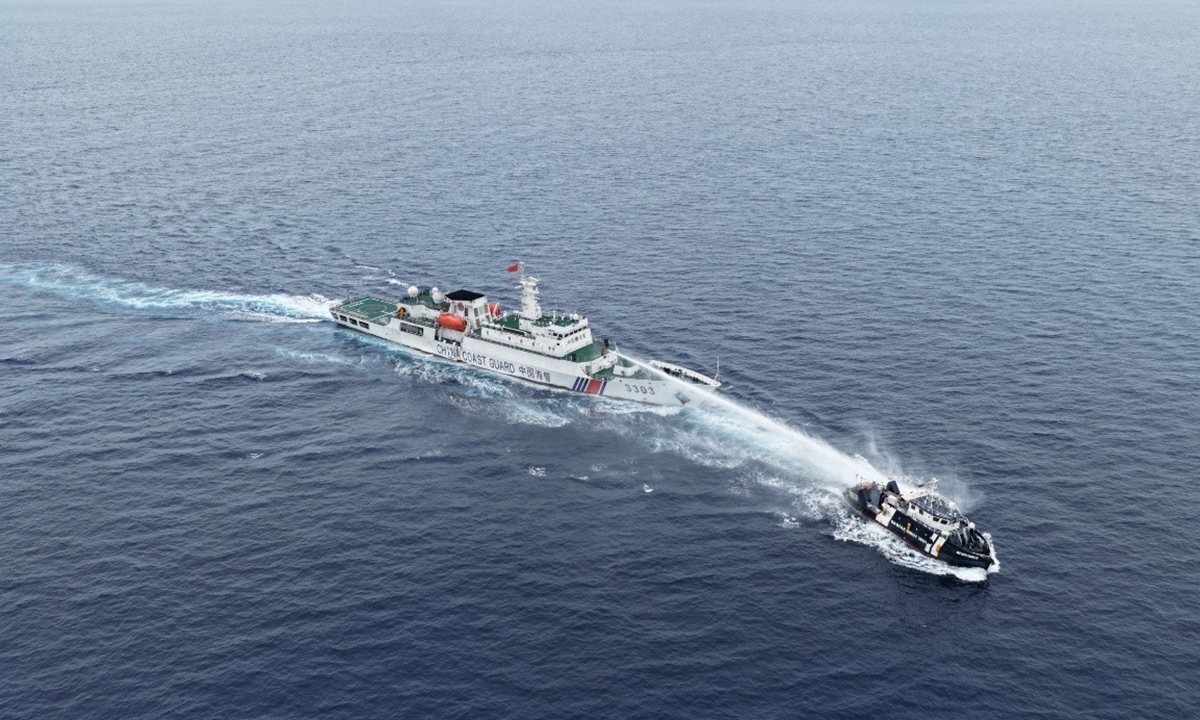
Cloaked in the academic mantle of a Stanford‑affiliated "think‑tank" but operated by retired US military officers; dispatching no warships but endlessly churning out provocation scripts in the South China Sea, and shifting from choreographing footage of maritime stand‑offs to meddling in legitimate China‑Philippine cultural and academic exchanges, the SeaLight has loomed behind numerous China‑Philippine maritime frictions over the past years.
The true nature of the SeaLight, once stripped of disguise, is a well‑orchestrated cognitive‑war tool targeting China. It delivers strategies, provides talking points, furnishes intelligence and cultivates proxies, weaponizing both maritime confrontations and people‑to‑people exchanges to deliberately stir up tensions in the South China Sea.
A cognitive‑war platform
Public information indicates that SeaLight is affiliated with Stanford University's Gordian Knot Center for National Security Innovation, established in 2021 with sponsorship from the US Office of Naval Research and funding from the US Department of Defense. The funding sources amounted to approximately $12.8 million.
Public records indicate that SeaLight's "director" Ray Powell served 35 years in the US Air Force, including posts in the Philippines, Japan, Germany, and Qatar. In 2022, following his departure from overseas service, he launched "Project Myoushu," which evolved into "SeaLight" in 2023.
When Global Times reporter browsed SeaLight's website, multiple unprofessional features of this self‑proclaimed "think‑tank" came to light. Aside from its "director" Powell, the team counts merely three other members, one of whom is a web developer.
Even so, this same "think tank" smeared China's lawful actions to safeguard sovereignty in the South China Sea on its website as the world's "most expansive and aggressive maritime gray‑zone programs."
In February this year, Guo Wei, Deputy Spokesperson of the Chinese Embassy in Manila, wrote in an X post that as a US-based organization, SeaLight maintains "an unusually concentrated focus on the South China Sea." It has reacted to maritime developments with remarkable speed, at times even preceding official statements from Philippine authorities.
"Why does SeaLight concentrate so heavily on this specific region? Through what channels does a US-based entity obtain rapid access to satellite imagery and operational information located thousands of kilometers away?" Guo asked.
A Manila‑based source told the Global Times on Friday that SeaLight maintains close‑knit, in‑depth coordination with the Philippine Coast Guard. The two sides sustain long‑term information exchange and intelligence‑sharing, forming a collaborative model through which the Philippines provokes maritime incidents at sea, SeaLight assigns public‑narrative framing, and social media platforms amplify the hype, to stage targeted cognitive‑war games against China.
Billed as a research institute, SeaLight is essentially a China‑targeting cognitive‑war platform centered on a small group of individuals, supplying the Philippines with policy advice, intelligence inputs and public‑narration talking points, Chen Xiangmiao, a research fellow at the National Institute for South China Sea Studies, told the Global Times on Friday.
In addition, it serves as a megaphone for the Philippines, churning out disinformation across social‑media platforms to viciously smear China and fabricate the "China threat" narrative, courting international attention in a deliberate bid to stoke regional tensions, Chen added.
"An ex-US Air Force colonel is now running the show in Philippine foreign relations," Rod Kapunan, a columnist for the Philippines' daily newspaper The Standard, wrote in his article in 2024. He further described Powell as the author of the "transparency strategy," which Philippine officials took as "Philippine policy."
"SeaLight hides its main objective, which is to apply the 'missing context fallacy' to create an anti-China narrative out of the South China Sea territorial claims disputes amongst the five littoral states surrounding the strategically critical body of water," Kapunan said in the article.
"Still, its China‑focused cognitive warfare yields diminishing marginal returns," said Chen, "Repeated lies fail to convince the public. For this reason, it keeps hunting for new material for attacks, yet it can never create any major ripples."
Back in September 2024, an article in The Diplomat titled "The Philippines Should Take Note: 'Assertive Transparency' Is Not a Strategy" noted that it was in 2023, "spurred on by the likes Raymond Powell and the folks at Project Myoushu, that the Philippines began publicizing maritime incidents in the South China Sea." However, what Philippine authorities need to understand is that "assertive transparency" has reached its saturation point.
The second battlefield
For a long period, SeaLight fought its main battles on South China Sea waters, guiding the Philippines to hype stand‑offs and fabricate the false "China bullying the Philippines" narrative. Lately, however, it has shifted its battlefield, targeting normal China‑Philippine cultural and academic people‑to‑people exchanges.
Last month, Philippine Defense Secretary Gilberto Teodoro Jr. called for greater scrutiny of foreign academic and cultural exchange programs with China, in response to a SeaLight report that claimed China's Jinan University has become the main broker between China's institutions and Chinese-language schools in the Philippines.
This incident directly forced the cancellation of a three‑week‑long field research trip to the Philippines scheduled for August 4 by Dai Fan, Director of the Center for Philippine Studies at Jinan University.
Dai told the Global Times on Friday that this incident lays bare the fact that SeaLight is by no means a rigorous, neutral academic‑research platform. Instead, it follows a propaganda playbook where conclusions come first and evidence is cobbled together afterwards.
Nevertheless, this simplistic and heavy‑handed narrative is highly deceptive and manipulative in the public opinion arena. It can easily mislead the Philippine public and foster one‑sided perceptions, Dai added.
In an X post on August 2, the Chinese Embassy in Manila further pointed out that the incident marks Ray Powell's "second battlefield" against China, from maritime disputes to civil society.
"His broader objective appears clear: to encourage the Philippines to view nearly every interaction with China through the lens of strategic confrontation, gradually transforming the country into a frontline state in Washington's competition with Beijing. The ultimate goal is to systematically turn the Philippines into a 'proxy battlefield' for containing China," reads the embassy's X post.
The latest report released by SeaLight was immediately echoed by Philippine Defense Secretary Teodoro, underscoring the close collusion between the two sides, Chen noted.
Based on long‑term observations by a Global Times source based in the Philippines, SeaLight, the Philippine Coast Guard and pro‑US, anti‑China hard‑line forces in the country have forged an interconnected chain. They have long sought to push for amendments and upgrades to the Philippines' anti‑espionage law and advance legislation for the so‑called "proxy bill," aiming to establish a systematic, institutionalized anti‑China mechanism.
According to Chen, there is a strong likelihood that Philippine authorities provide financial backing for SeaLight's China‑focused cognitive‑war operations. Meanwhile, Powell and SeaLight have become a key instrument for the Philippine military to secure budget appropriations from Congress.
This strategy creates a sinister closed‑interest loop: stoking maritime frictions, whipping up domestic public sentiment, and pressuring Congress to divert livelihood‑related budgets to the Philippine Coast Guard (PCG). The tenser the maritime situation, the more resources flow to the PCG. By contrast, calm seas strip the force of its rationale for expansion, Chen said.
According to Chen, this opportunistic hype‑driven model adopted by the Philippine side in collusion with SeaLight will ultimately backfire. The South China Sea disputes could have been managed through dialogue to share marine and fishery resources and deliver mutually beneficial outcomes. However, SeaLight keeps stoking conflicts and amplifying divisions, severely undermining the Philippines' environment for peaceful development, at the expense of the Filipino people's vital interests.
Regional countries ought to see through the true nature of such external "think‑tank" projects. They should recognize the harm these entities inflict on regional well‑being, peace and stability by artificially orchestrating public opinion storms over the South China Sea, said Chen.
The Philippines' ill-judged farce of provoking China will sooner or later end in tragedy for itself, Chen warned.
。根据美国癌症协会(ASC)的数据,从1991年到2016年,美国的癌症死亡率一直在稳步下降,年增长率约为1.5%,25年来累计下降了27%。研究人员说,这相当于减少了约260万癌症死亡人数。然而,尽管取得了这一进展,不同社会经济地位之间癌症死亡率的差异也在增加。报告指出,癌症对更经济弱势群体的压力正在增加。尽管癌症死亡率总体下降是个好消息,“坏消息是,报告强调了社会不平等的加剧,尤其是在社会经济地位较低的群体中。

二 | ”俄亥俄州立大学综合癌症中心癌症健康平等中心副主任达雷尔·格雷二世博士说。

三 | 没有参与这项研究的达雷尔·格雷二世说:“这强调了卫生服务提供者、研究人员和公众的重要性,以及继续促进健康平等的重要性。

四 | ”在1月8日发表的年度报告中,美国癌症协会分析了癌症发病率、死亡率的最新数据。以及在美国的生存。

五 | 2016年,每10万人中有156人死于癌症,而1991年为215人。报告指出,25年来癌症死亡率一直在下降,主要是由于吸烟者人数的减少(吸烟会增加患多种癌症的风险,特别是肺癌),以及早期检测和癌症治疗技术的进步。

六 | 例如,1990年至2016年男性肺癌死亡率下降了48%,2002年至2016年女性肺癌死亡率下降了23%。1989-2016年女性乳腺癌死亡率下降40%,1993-2016年男性前列腺癌死亡率下降51%,1970-2016年男性和女性结直肠癌死亡率下降53%。然而,近年来,其他几种癌症的死亡率一直在上升,如子宫内膜癌(2012-2016年增长2.1%)和男性胰腺癌(同期每年增长0.3%)。2012年至2016年,肝细胞癌死亡率男性增加1.2%,女性增加2.6%。格雷指出,尽管乳腺癌和结肠癌等癌症可以通过相关体征进行筛查,但胰腺癌和膀胱癌缺乏此类筛查的基础。”格雷说:“我们正在根据指导方针制定筛查方案,但与此同时,这些癌症的死亡率可能会继续上升。”社会经济差异研究还发现,不同种族之间癌症死亡率的差异正在缩小,但不同社会经济地位之间的差异继续增加。例如,美国较贫困地区的妇女死于宫颈癌的人数是美国较富裕地区妇女的两倍。

七 | 贫困地区男性肺癌和肝癌的死亡率也比富裕地区高40%以上。

八 | 为了解决这一差距,还需要作出更多努力。

九 | ”报告总结说,这些贫困地区非常适合地方重点癌症控制倡议,例如改善获得基本医疗服务的机会、加强戒烟干预、促进健康生活方式和开展癌症筛查活动等。格雷同意这一观点,并指出社会经济地位较低的患者在预防癌症方面可能面临许多障碍,例如不能抽出时间去看医生或买健康食品。”这些都很重要。我们必须帮助人们解决这些问题。

十 | ”格雷说。
Current article:http://saxc8hr.yindabobiehonggaonumiao.bond/eot37t/zhprosd.html
Published on:19:47:03
相关新闻
- 火星惊现“蜘蛛状岩层”?假的!网红图破绽百出
- 韩国狗肉馆迎来最后一批食客 明年2月起禁吃狗肉
- AI变革将是未来十年的周期
- 市场监管总局发布酱香型白酒掺杂食用酒精筛查检验方法
- 全场只拿85分太便秘了埃克塞尔:火箭这轮该启用谢泼德
- 中国黄金协会:一季度我国黄金产量、消费量同比双增长
- S. Korea, Vietnam vow stronger ties in cutting-edge sectors, building on FTA
- भिवानी में गड्ढे में संतुलन बिगड़ने के बाद पेड़ से टकराई कार, युवक की मौत
- 《魔法门之英雄无敌III重制版》正式公布!全程中配 两部DLC
- 又来了!蒂格:用利拉德换掉库里 勇士很有可能拿到一样的结果
最后更新
- 建造能手打擂台 毫厘之间“拼”匠心
- 【品种策略】棉花:08月26日多家期货公司晨报观点汇总
- 搭建对外开放平台 激活服务贸易动能——2026年中国国际服务贸易交易会看点前瞻
- 工信部:“十四五”期间我国规模以上工业增加值年均增长5.9%,工信部:“十四五”期间我国规模以上工业增加值年均增长5.9%
- US president’s order to scale back military exercises with S.Korea signals intention to ease tension on Korean Peninsula, return to ‘direct diplomacy’ with Pyongyang: experts
- 无问芯穹夏立雪:智能体带来Token分层,国产芯片适配效果明显提升
- 以“风”为令!杭州各部门严阵以待迎战台风“白海豚”
- 小“马达”链上新产业|活力中国调研行
- 阿根廷主帅回应“阴谋论”
- 北京超充三大成果将亮相2026年服贸会,助力充电行业提质升级
热门新闻
- 深成指、创业板指均跌超1%
- WNBA申请一个商标,惊动了两支棒球队?
- Xi urges advancing socialism with Chinese characteristics on centenary of late leader Jiang Zemin
- 50国发表反俄声明,美国未参与!中方最新发声:在乌克兰问题上的立场客观公正、一以贯之,敦促当事方推动局势降温
- 哪怕最小的选择,也会点亮整个大脑
- 首创期货:成本走弱,供应趋增,PTA期价大幅下挫
- 跳台之争,陈芋汐赢了0.3分
- 史诗级IPO前再释炸裂数据!Anthropic预计潜在市场规模超30万亿美元
- 全国福彩系统集中发布年度责任彩票报告
- [포토뉴스]김왕규 양구군수, 도청 국·과 방문해 지역 주요현안 건의